Featured

Top 10 Comedy TV Series

There’s no such thing as a selfless good deed

— Joey.

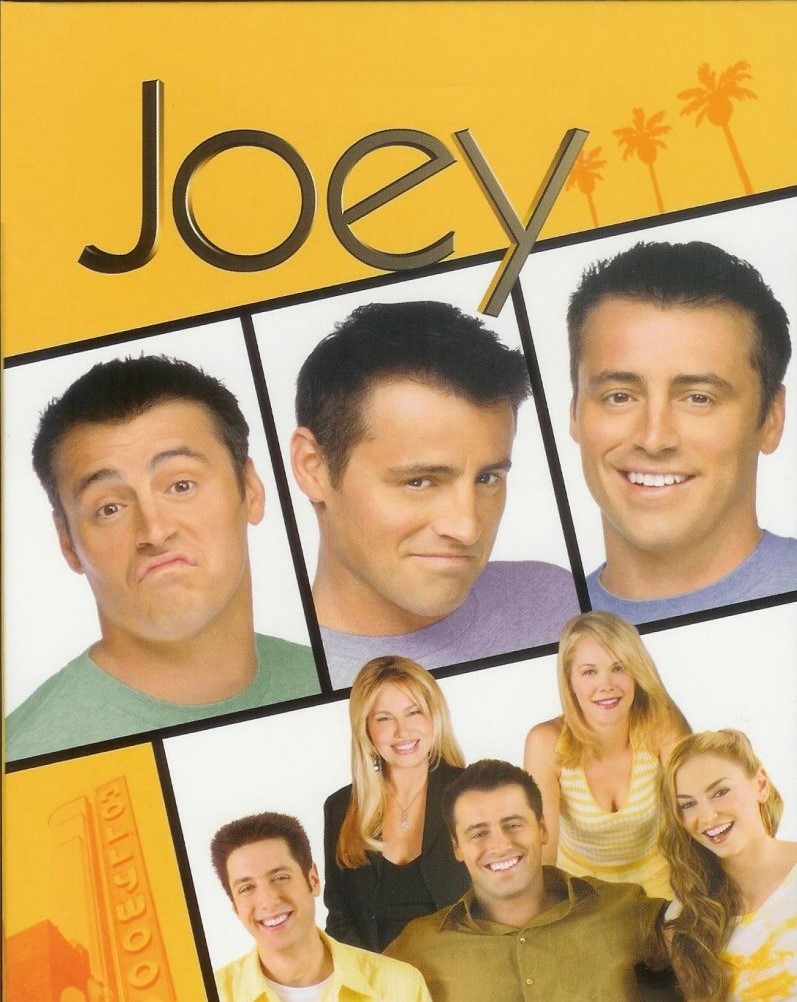
10. Joey (2004 – 2006)

Joey is an American sitcom, which starred Matt LeBlanc reprising his role as Joey Tribbiani from the sitcom Friends.Matt LeBlanc as Joey Tribbiani, who moves to Los Angeles from New York, to proceed with his acting career.

Episode count46
No. of seasons2
Running Time20-24 Mins

9. Young Sheldon (2017 – Present)

For 9-year-old Sheldon Cooper it isn’t easy growing up in East Texas. Being a once-in-a-generation mind capable of advanced mathematics and science isn’t always helpful in a land where church and football are king. And while the vulnerable, gifted and somewhat naive Sheldon deals with the world, his very normal family must find a way to deal with him

Episode count56
No. of seasons3
Running Time22 Mins

8. Silicon Valley (2014 – 2019)

Richard, a programmer, creates an app called the Pied Piper and tries to get investors for it. Meanwhile, five other programmers struggle to make their mark in Silicon Valley.

Episode count53
No. of seasons6
Running Time28-47 Mins

7. Two and a Half Men (2003 – 2015)

A hit sitcom built on often-raunchy material, starring Charlie Sheen and, later, Ashton Kutcher begins with the premise of a Malibu bachelor (Sheen) whose life is disrupted when his brother and 10-year-old nephew move in with him. In the ninth season, Kutcher replaces Sheen, playing a billionaire with a broken heart.A hedonistic jingle writer’s free-wheeling life comes to an abrupt halt when his brother and 10-year-old nephew move into his beach-front house.

Episode count262
Number of seasons12
Running Time21 mins

6. How I Met Your Mother (2005 – 2014)

A comedy series about a guy in his twenties and the romance between him and the woman who will be his wife and the mother of his children. The series will also flash forward to him telling the story to his kids.

Episode count208
Number of seasons9
Running Time22 mins

5. The Office (2005 – 2013)

The Office, Dunder Mifflin Regional Manager Michael Scott (Steve Carell) leads the documentary team and his staff on a journey through inappropriate behavior, well-intentioned but misguided comments and a myriad of poor management techniques.

Episode count201
Number of seasons9
Running Time22-42 mins

4. Brooklyn Nine-Nine (2013 – Present)

Jake Peralta, an immature, but talented N.Y.P.D. detective in Brooklyn’s 99th Precinct, comes into immediate conflict with his new commanding officer, the serious and stern Captain Ray Holt.

Episode count130
Number of seasons6
Running Time21-23 mins

3. Modern Family (2009 – 2020)

Three modern-day families from California try to deal with their kids, quirky spouses and jobs in their own unique ways, often falling into hilarious situations.

Episode count244
Number of seasons11
Running Time20-23 mins

2. The Big Bang Theory (2007 – 2019)

Leonard and Sheldon are brilliant physicists, the kind of “beautiful minds” that understand how the universe works. But none of that genius helps them interact with people, especially women.A woman who moves into an apartment across the hall from two brilliant but socially awkward physicists shows them how little they know about life outside of the laboratory.

Episode count279
Number of seasons12
Running Time18-22 mins

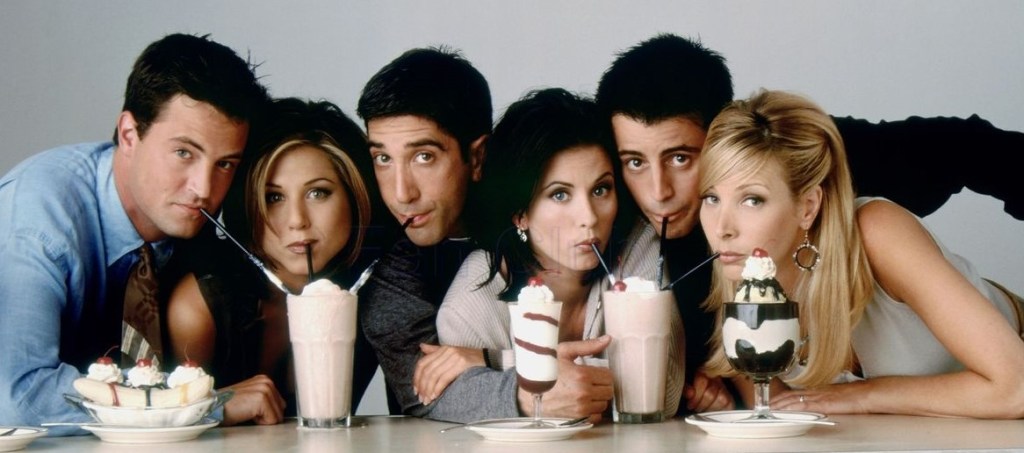
1. FRIENDS (1994- 2004)

This hit sitcom follows the merry misadventures of six 20-something pals as they navigate the pitfalls of work, life, and love in the 1990s Manhattan. Most of all, it’s about friendship–for when you’re young and single in the city, your friends are your family. Friends is an American sitcom television series, created by David Crane and Marta Kauffman

Episode count236
Number of seasons10
Running Time20-22 mins

Video Compressor Software

Link to software: Software Video Compressor

Video files get bigger and bigger and nobody is surprised when YouTube, Facebook, and Vimeo support 4K videos for everybody to watch and upload.

Video Compressor application help you reduce your file size. There are two compress available

  1. Normal Compressor
  2. Heavy Compressor H.265

An HEVC file contains a video stored in the High Efficiency Video Coding (HEVC) format. This format, also known as H.265, improves over the H.264 standard by allowing videos to be stored with a lower file size but with the same video quality. HEVC helps users store more videos on their devices and also substantially reduces the file size of high-resolution videos such as 4K and 8K videos.

High Efficiency Video Coding, also known as HEVC or H.265, is the next step in this evolution. It builds off a lot of the techniques used in AVC/H.264 to make video compression even more efficient.

How to Use ?

Input File : Select input Video file

Output Directory : Select where output compressed video will be saved

Default video name = “stuffbyyc.com”

Compress file : Software will show ” Not Responding ” After clicking on ” Compress File ” Don’t worry about it, it’s working, it takes time to compress

Heavy compress File = It converts into H.265 format and compresses Video file

You need to move the output file “stuffbyyc.com.mp4” after each conversion or you will get error

Introduction to Machine Learning

Some of the most important question we first ask about any topic are What ? Why ? How ?. You will find a lot of paid courses on Machine learning. Here I will creating a complete series of Blogs on Machine learning after that deep learning and Artificial Intelligence. So lets start with the base question of any topic. What is it ?

A computer would deserve to be called intelligent if it could deceive a human into believing that it was human Alan Turing

What is Machine Learning ?

Machine Learning is a branch on science that deals with programming the system in such a way that they automatically learn and improve with experience.

To put it in simple words think of any task a human does like arranging a desk or shelf. First we put thinks in order how good they look. but, after some time we arrange it according to how frequently we use things on the shelf. Like, we put the book that we are reading in a place which is easily accessing an not behind a pile of Books having good cover page. This is done when you get the experience and come to a conclusion that accessibility is more important that appearance in case of arranging the books.

Similarly, In Machine Learning we use data for gaining experience ( Experience is ML might be as simple as changing value of few variable in a formula by using the data).

Learning Means recognizing and understanding the input data and making wise decisions based on the supplied data. Algorithm builds knowledge from specific data and past experience with the principles of statistics, probability theory, reinforcement learning, etc.

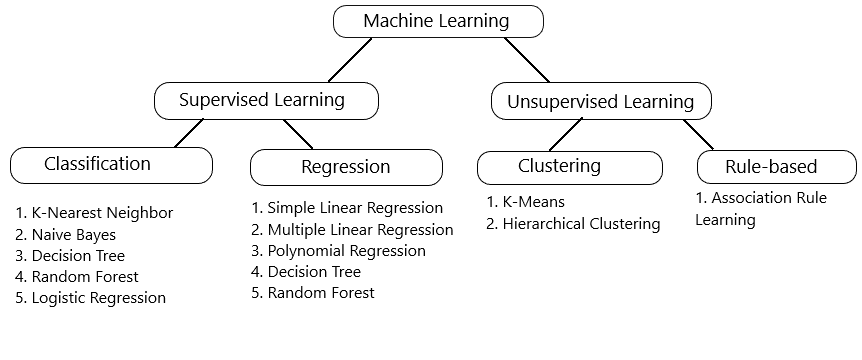
What are the two broad categories of Machine learning tasks ?

1. Supervised Learning

2. Unsupervised Learning

Supervised Learning

Supervised learning is where you have Input variables ( x ) and an output variable ( y ) and you use an algorithm to learn the mapping function from the input to the output.

y= f(x)

The goal is to approximate the mapping function so well that when you have new input data ( x ) that you can predict the output variable ( y ) from that data

In Supervised learning the model is trained on a labelled dataset. Labelled dataset is one which has both input and output parameters.

It is called supervised learning because the process of an algorithm learning from the training data set can be thought of as a teacher supervising the learning process

The algorithm iteratively makes prediction on the training data set and is corrected by the teacher ( correct answer ).

There are basically two type of supervised learning

  1. Classification
  2. Regression

1. Classification

The main goal of classification is to predict the target class ( Yes/No ), ( True/False ), ( animal/human )

These algorithms are used when the value of target output variable is discrete as { Yes| No }

Binary or binomial classification is the task of classifying the elements of a given set into two groups on the basis of a classification rule

Multi-class or multi-nomial classification is the problem of classifying instances into one of three or more classes

Example : classifying email to predict if the email is a Spam mail or not

2. Regression

Regression is a technique for predicting the value of dependent variable as a function of one or more independent variable in the presence of random error.

In simple terms Regression is used to predict continuous values. It is a statistical processes for estimating the relationships between a dependent variable and one or more independent variables.

Example: Predicting house prices of a particular area.

Unsupervised Learning

Unsupervised learning is where you only have input data ( x ) and no corresponding output variable

The goal for unsupervised learning is to model the underlying structure or distribution in the data in order to learn more about the data

It is called unsupervised learning because unlike supervised learning there is no Labelled data that means no correct answer or no teacher.

Unsupervised learning problems can be further grouped into two parts

  1. Clustering
  2. Association Rule Mining

1. Clustering

A clustering problem is where you want to discover the inherent grouping in the data such as grouping customers by purchasing behavior

In simple terms Cluster analysis or clustering is the task of grouping a set of objects in such a way that objects in the same group are more similar to each other than to those in other groups

Example : Suppose you have data of all the products sales from your store and you want to assign priority to customer in order to boost sale by giving offers according to priority. you can use clustering algorithms to generate cluster of people and assign priority accordingly.

2. Association Rule Mining

An association rules learning problem is where you want to discover rules that describe large portions of your data, such as people that buy X also tend to by Y.

Association rule learning is a rule-based machine learning method for discovering interesting relations between variables in large databases.

Example: Market basket analysis – It is used in deciding the location of items inside a store. ex.If someone buys a packet of milk also tends to buy bread at the same time.

We will get into details of explanation of each algorithm and task Blog by Blog.

Now lets get to the second important question …

Why Machine Learning ?

Most of us know the answer to this question. I will try to example in too. Humans, most of the time have a lot of things to focus on. Now just image if we were made to do one and only one task and now if we could do that task without the need to take break or rest.

With the help of machine learning we can focus on a single task with more precision than human and machine do not need rest or time off. Machine learning is a way to reduce human efforts.

Some of the task are very complex for a human mind and some are easy but takes time. Example take simple calculation but with big number. Best of best would still require a few second. But, for machine 1 second is similar to eternity depending on the processing power the machine has.

The base reasons are machine is faster, Machine needs no rest and if we have the resources to make machine do our activity we could focus on much more important problem in the world.

There are a lot of reasons to this why statement. Give some of your reasons in comment section.

The final question

How does it work ?

I will be creating a Series of Blogs in which I will try and explain most of the models of machine learning and how to implement them in python and how the algorithm works. Stay Tuned…

k-Nearest Neighbors in Machine Learning (k-NN)

K-Nearest Neighbors is one of the most basic classification algorithms in Machine Learning.

Code and Data-set Link : Github – StuffByYC | Kaggle – StuffByYC

Code and Data-set also available in Downloads section of this website

In this blog we will understand how K-Nearest Neighbors algorithm works. How to Implement it with Python.

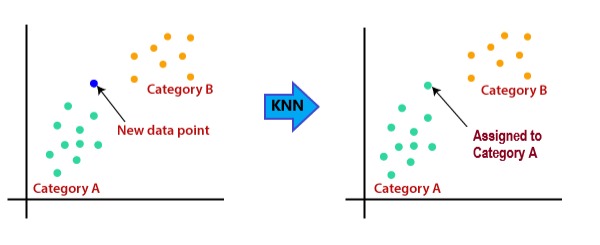
KNN algorithm uses “feature similarity” to predict the values of new data-points based on distance.

To see type of distance used in distance based model go to: Type of Distances used in Machine Learning algorithm

Understanding K-Nearest Neighbor

What is K ?

k is the number of neighbors which will help us to decide the class of the new data-point.

Algorithm Steps:

Step 1: Choose the values of “K” that is. the number of neighbor which will be used to predict the resulting class.

Ex. Lets suppose we choose value of k as 5.

There are 2 classes [“Cat” , “Dog” ]. We have to predict if the new data point belongs to class “Cat” or “Dog”.

Step 2: Calculate the distance from the new data point to remaining data points and take k number of the shortest distant neighboring data point. you can choose which distance formula to use. Type of Distances used in Machine Learning algorithm

Ex. Lets suppose the 5 nearest data-point to the New data point “N( x,y ) “ are “A“, “B“, “C“, “D“, “E” that we calculated using euclidean distance method.

Step 3: After getting the “K” nearest data-points, count the categories of the data point ( That is count how many of those k neighbors belong to which categories).

Ex. The class of data points are

A – “Cat”

B – “Dog”

C – “Cat”

D – “Dog”

E – “Dog”

Now count the categories.

“Cats” – 2 and “Dog” – 3

Step 4: Assign the new data point “N” with the class having maximum categories count

Ex. Here category or class “Dog” has the maximum number of category count.

3” out of “5” of the nearest data-point belong to category “dog”

So the new data point “N” will be assigned to class “Dog

Let me know in comments if you have any difficulty understanding this.

Implementing K-Nearest Neighbor

Below we will Implement KNN Algorithm using Sklearn Library.

The task is to Predict if the Customer will purchase the product or not

Code and Data-set Link : Github – StuffByYC | Kaggle StuffByYC

Code and Data-set also available in Downloads section of this website

You need to install the Sklearn library

Open command prompt

pip install scikit-learn

Step 1: We will Import the Libraries

Step 2: Importing the data ( You can find the Sales.csv file in the Github Link above )

Step 3: Splitting Data into training and testing data

Here Test_size = 0.25. It means the out of the dataset that data Allocated for testing is 25%

Step 4: Feature Scaling

What is Feature Scaling ?

As we have learned above we are using distance to predict a particular class. Now in this particular data-set we have salary with value ranging from thousand to 100 thousand and the value of age is within 100.

As salary has a wide range from 0 to 150,000+. Where as, Age has a range from 0 – 60 the distance calculated will be dominated by salary column which will result in erroneous model so we need feature scaling

Feature Scaling is a technique to standardize/normalize the independent features (data columns) present in the data in a fixed range.

Below is the sample transition of data from

X(data) -> X (After train_test_split) -> X (After feature scaling)

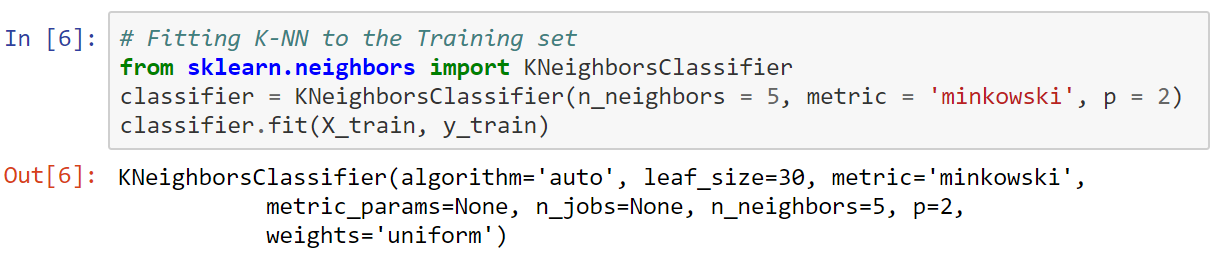
Step 5: Fitting the model

Here we will be using euclidean distance so we have set p = 2

Click on : Type of Distance to know more.

K value is set to 5

Step 6: Predicting the test result using the Classifier / Model

Step 7: Calculating Performance Metrics to Evaluate model

Click on Performance metrics to know more

Confusion matrix

True Positive (TP): Result data is positive, and is predicted to be positive.

False Negative (FN): Result data is positive, but is predicted negative.

False Positive (FP): Result data is negative, but is predicted positive.

True Negative (TN): Result data is negative, and is predicted to be negative.

Click on confusion matrix to know more

Recall – 85.29%

Click on recall to know more

Accuracy – 90.53%

Click on accuracy to know more

Precision – 87.88%

Click on Precision to know more

F1 Score

Click on F1 Score to know more

Have successfully implemented K-Nearest Neighbors in python with the help of scikit-learn Library. check out Advantages and Disadvantages of K-Nearest Neighbors

Nutella Chocolate Truffles Recipe

Ingredients

  • 1/2 cup Nutella, divided
  • 4 ounces (1/2 cup) heavy cream
  • 5 ounces milk chocolate, chopped finely or you can use milk chocolate chips

Garnish

  • 8 hazelnut wafers, crushed
  • 8 ounces milk chocolate for coating (or milk chocolate chips)

Optional Garnish

  • Cocoa powder
  • Finely chopped hazelnuts

Steps to make Nutella Chocolate Truffles

  1. Nutella Centers: Line a baking sheet with parchment paper. With just half of the Nutella (about 4 tablespoons), fill piping bag (or you can use 2 small spoons) to create 16 Nutella centers, they should be no larger than half a teaspoon. Leave in the freezer for 1 hour, until frozen.
  2. Ganache: Heat the cream in a heavy-bottomed saucepan until bubbles begin to form around the edge of the pan. Place the finely chopped milk chocolate and the remaining Nutella into a medium-sized mixing bowl.
  3. Pour half of the hot cream over the milk chocolate; allow it to sit for 30 seconds. Then, slowly whisk until smooth. Add the remaining hot cream gradually and mix until all of the cream has been incorporated and the ganache is smooth. Leave to cool in the refrigerator for 15 minutes.
  4. Whip the cold ganache until light and fluffy; place back into the refrigerator for at least 30 minutes or until you are ready to make the truffles.
  5. Working quickly, use two spoons to roll the Nutella centers into the whipped ganache. Working in batches may be best in order to prevent any softening of the ganache and centers. For a smoother truffle, you can use powder-free latex gloves to roll them by hand. Place the truffles back onto a parchment-lined baking sheet and leave in the fridge for 15 minutes.
  6. Melt 8 ounces of milk chocolate either over a double boiler or in the microwave. To melt the chocolate in the microwave, chop the remaining 8 ounces of milk chocolate and place ¾ of it in a small microwave-safe bowl in the microwave for 20 seconds.
  7. Stir the chocolate and continue to microwave for 20 seconds at a time, stirring in between, until the chocolate is smooth and shiny. Add the remaining ¼ of the chocolate and stir until smooth.
  8. With two small spoons, pick up each truffle and cover it with the melted chocolate then roll in the ground hazelnut wafers or optional garnishes, allow the truffles to sit for a few minutes until set, serve at room temperature.

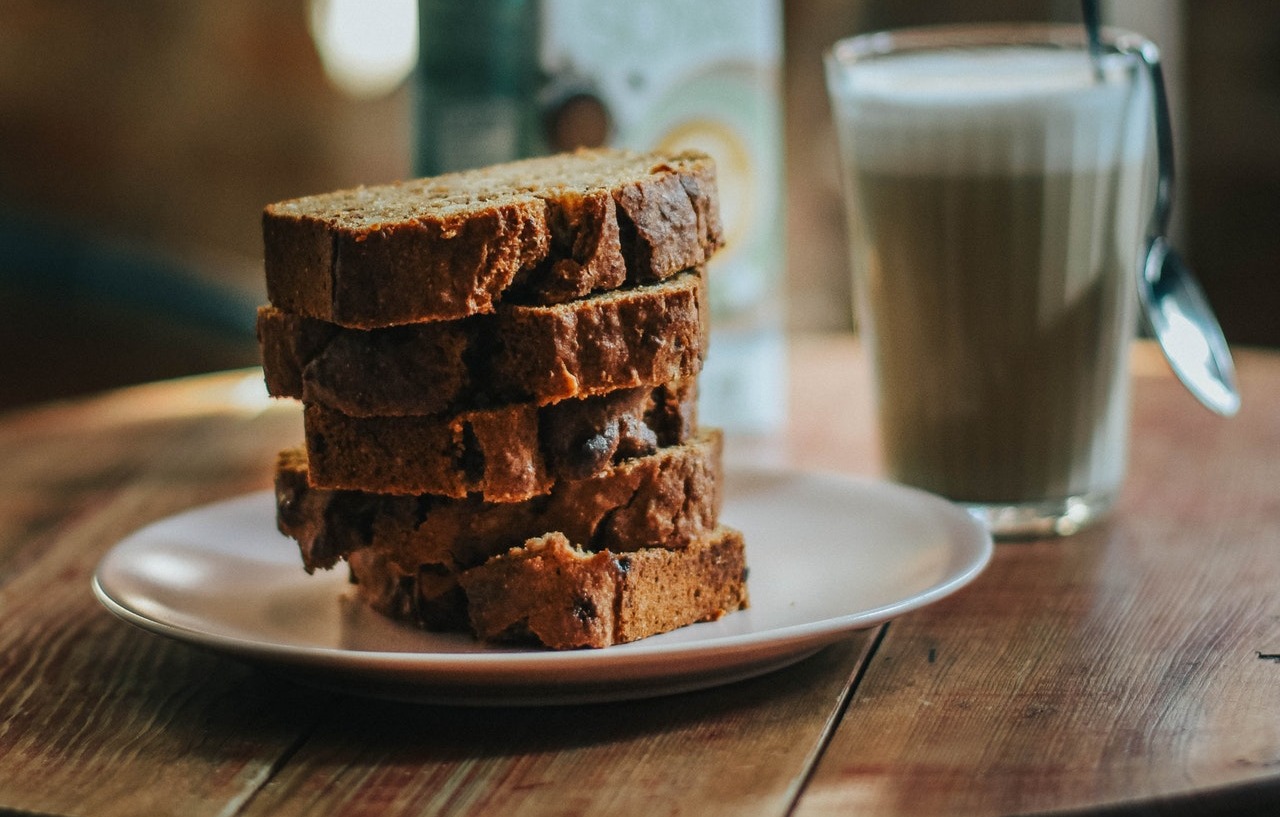
Banana Bread Recipe

Banana bread is a type of bread made from mashed bananas. It is often a moist, sweet, cake-like quick bread

Ingredients:

  • 2 cups all-purpose flour
  • 1 tsp baking soda
  • 1/2 tsp kosher salt (or 1/4 tsp table salt)
  • 1/2 cup butter, softened
  • 3/4 cup brown sugar
  • 2 eggs, beaten
  • 2 1/2 cups mashed overripe bananas (about 4 bananas)

Step to make Banana bread recipe

  1. Preheat oven to 350 degrees. Lightly grease a 9×5 inch loaf pan. In a large bowl, combine flour, baking soda and salt.
  2. In a separate bowl, cream together butter and brown sugar.
  3. Stir in eggs and mashed bananas until well blended.
  4. Stir banana mixture into flour mixture; stir until well combined.
  5. Pour batter into prepared loaf pan.
  6. Bake in preheated oven for 60 minutes, until a toothpick inserted into center of the loaf comes out clean.
  7. Let bread cool in pan for 10 minutes, then turn out onto a wire rack to finish cooling.

Chocolate Chip Hazelnut Cookie Recipe

Some times accidents are good. The chocolate chip cookie was created by accident.

Ingredients

  • 3 1/2 cups all-purpose flour (476 grams)
  • 1 1/4 teaspoons fine sea salt
  • 3/4 teaspoons baking soda
  • 1/2 teaspoon baking powder
  • 8 ounces unsalted butter, at room temperature (2 sticks)
  • 1 cup sugar (200 grams)
  • 1 cup packed brown sugar (200 grams)
  • 1 1/2 teaspoons pure vanilla extract
  • 2 large eggs, at room temperature
  • 12 ounces semisweet or bittersweet chocolate, coarsely chopped (or 2 cups chocolate chips)
  • 1 1/2 cups hazelnut or almond flour (150 grams)

Steps to make Chocolate Chip Hazelnut Cookie

  1. In a medium bowl, whisk the flour, salt, baking soda and baking powder together.
  2. In the bowl of the stand mixer fitted with a paddle attachment, beat the butter on medium speed for 1 minute, until smooth. Add the sugar and brown sugar and beat for 2 minutes, until well blended. Beat in the vanilla.
  3. Add in the eggs, one at a time, beating for minute after each egg goes in. Reduce the speed to low and add in the flour mixture in 4-5 additions, mixing only until each addition is just incorporated (about 5 seconds for each addition – don’t over-mix!)
  4. Still on low speed, mix in the chocolate chips and the hazelnut (or almond) flour. Refrigerate dough for 2 hours or up to 3 days. If you are planning to freeze a portion – you can scoop out 1 1/2-inch rounds of dough to freeze.
  5. Preheat oven to 350F with rack centered. Line two baking sheets with parchment paper. Scoop out 1 1/2″ rounds of dough onto baking sheet, about 2-inches apart.
  6. Bake the cookies one sheet at a time for 8 minutes, and then, using a spatula, gently press each mound down just a little; rotate the baking sheet when returning to oven. Bake for another 7 minutes, or so, until the cookies are pale brown. They’ll still be slightly soft in the center, but that’s fine- they’ll firm up as they cool. Transfer to rack to cool. Repeat with remainder of dough, always using a cool baking sheet.

Pulao / Pulav Recipe

Pulao / Pulav is a spicy rice dish prepared by cooking rice with various vegetables and spices.

INGREDIENTS

Basic Ingredients for pulao recipe

  • 1½ cups basmati rice (aged rice)
  • 2 tablespoons oil or ghee
  • 1 medium onion thinly sliced
  • 2 green chilies slit or as needed
  • 1 to 1½ cups mix vegetables chopped (carrots, beans, peans, potatoes)
  • salt as needed
  • 2 ½ cups water for pressure cooker ( 2¾ cups for pot, 1¾ cups for Instant pot)
  • 3 tablespoons mint (or pudina, finely chopped) (or coriander leaves)
  • 1½ teaspoons ginger garlic paste

Whole spices for veg pulao

  • 1 bay leaf (or tej patta)
  • 1 star anise (or chakri phool)
  • 1 strand mace (or javithri , large strand)
  • ½ to ¾ teaspoon shahi jeera (or caraway seeds) (or jeera – cumin)
  • 4 green cardamoms (or elaichi)
  • 6 cloves (or laung)
  • 2 inch cinnamon (or dalchini)
  • 1 small piece nut meg (or jaiphal) (optional)
  • ¼ teaspoon fennel seeds powder (or saunf powder – optional)
  • 2 pinches stone flower (or dagad phool – optional)

Steps to make Pulao / Pulav Recipe

Preparation for pulao recipe

  • Add basmati rice to a bowl and wash it a few times until water runs clear. 
  • Soak it for minimum 15 minutes. Drain off the water and set aside. 
  • While the rice soaks, rinse carrots, beans, peas, potatoes, onions, chilies & mint leaves.
  • Peel the carrots and potatoes. Nip off both the ends of beans and chop all of them to bite sized pieces.
  • Slice onions and slit chill. Fine chop the mint leaves. Set all of these aside.

How to make veg pulao recipe

  • Heat ghee or oil in a hot pan or cooker.
  • Next fry all the whole spices for a minute until they begin to sizzle.
  • Fry onions & chilies until onions turn golden. 
  • Next saute ginger garlic paste until the raw smell goes off. 
  • Add all the veggies and mint. Saute for 2 to 3 minutes.
  • Pour water and add salt too. Taste the water, it has to be slightly salty. 
  • Bring the water to a rolling boil. Next add drained rice and stir. 
  • If cooking in pot, cook on a medium heat until all the water is absorbed. Cover and cook on a low flame for 4 to 5 mins until the rice is done fully.
  • If making in pressure cooker, cover the cooker with the lid. Then cook on a medium high flame for 1 whistle. 
  • Switch off the stove. When the pressure releases, remove the lid and fluff up the pulao rice with a fork. 
  • Serve veg pulao hot or warm with a simple raita or gravy.

Instant pot pulao

  • Press the saute button & wait for the display to show “ON”. Pour oil to the inner pot of instant pot. Saute the spices in the hot oil for 30 seconds.
  • Fry onions & green chilies until transparent for 2 mins. Then fry ginger garlic pastejust for 30 seconds.
  • Next add in all the chopped veggies and mint. Saute for 2 mins. Add the drained rice (1 ½ cups) and salt.
  • Pour 1.75 cups water and mix. Press cancel button. Taste the salt level and add more if needed.
  • Scrape the bottom gently with the spatula to release any bits of food stuck. This prevents a burn notice. Secure the lid of the instant pot.
  • Press pressure cook button (high pressure) & set the timer for 5 mins. Position the steam release handle to sealing.
  • Instant pot beeps when it is done. Let the pressure release naturally for 5 mins.
  • Release the rest manually by moving the steam release handle from sealing to venting with a spoon.
  • Fluff up the vegetable pulao with a fork & serve with raita.

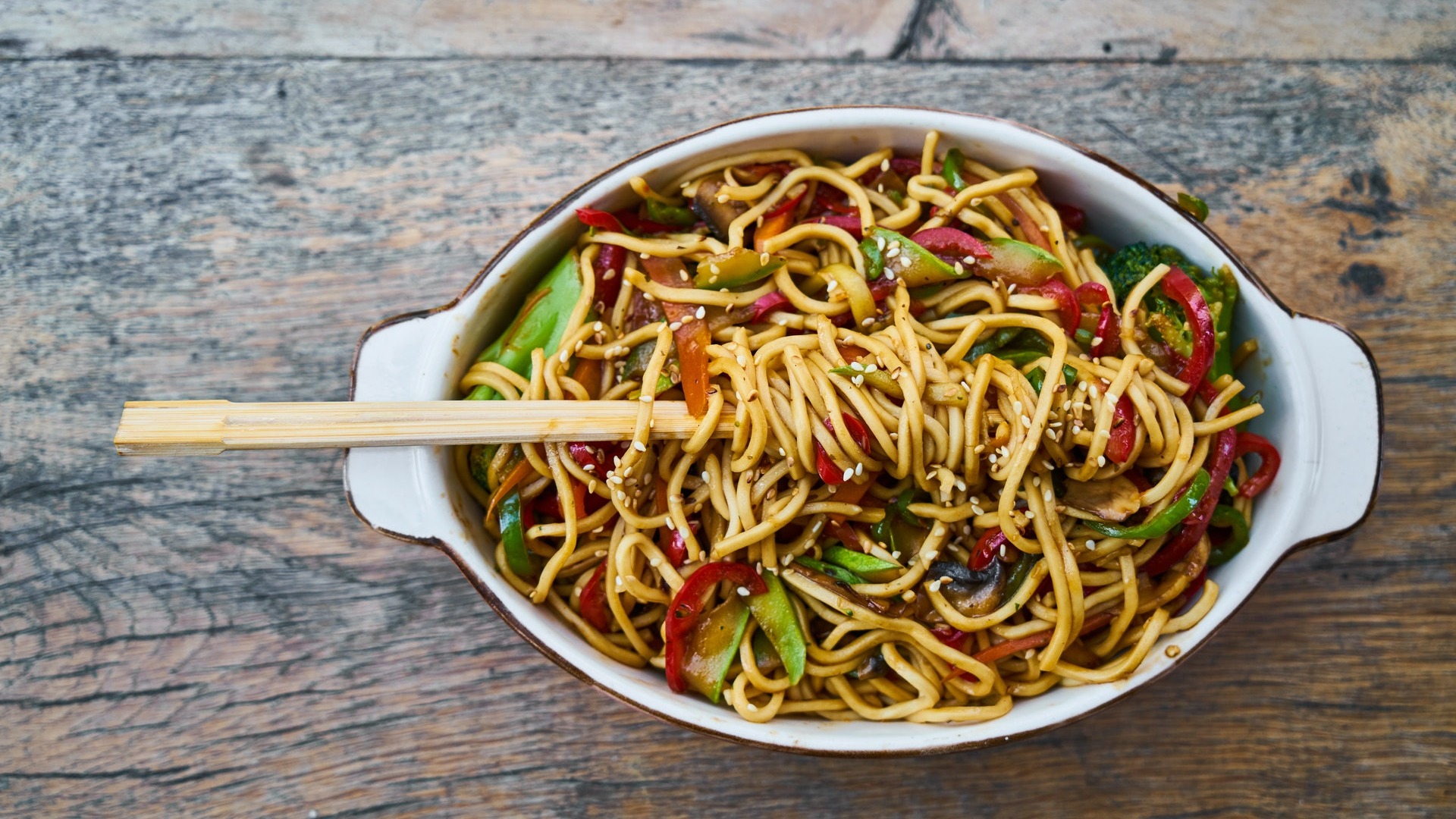
Chicken Hakka Noodles Recipe

Chicken Hakka Noodles – A Flavorful dish of sizzling Hakka noodles tossed with shredded chicken, vegetables and spicy Chinese sauces in a street style, heavenly delight.

Ingredients

  • 1 cup Chicken boiled and shredded
  • 150 grams Egg noodles
  • ½ cup Cabbage shredded
  • 1/3 cup Bell peppers Yellow and Red, julienned (optional)
  • ¼ cup Green pepper capsicum, julienned
  • 1/3 cup Spring onion greens chopped
  • ¼ cup onions sliced
  • 2 Eggs lightly whisked
  • ½ tablespoon Garlic finely chopped
  • 2-3 Green chillies finely chopped
  • 2 teaspoon Green Chili sauce you can increase or decrease it as per liking
  • 1 tablespoon Soy Sauce 15 ml
  • 1 teaspoon Vinegar
  • Salt and pepper  to taste.
  • 2 tablespoons Oil
  • 1 tablespoon Sesame oil

How to make chicken hakka noodles recipe

  • Boil the noodles according to the instructions given in the packet.
  • In a wok, heat oil, add garlic and chillies and fry for few seconds.
  • Add onions and sauté on high for 30 seconds.
  • Then, add, yellow and red pepper, capsicum and cabbage and sauté on high for another 30 seconds
  • Now shove the vegetables to one side of the pan and add the lightly whisked eggs. Let the cook for a while and then scramble the eggs well.
  • Then add the shredded chicken, green chilli sauce, soy sauce, vinegar, salt and pepper and toss once everything well
  • Now add the boiled noodles and toss.
  • Finally, add spring onion greens and sesame oil, toss once. Chicken hakka noodles is ready to be served

Kaju masala recipe

Kaju Curry is a deliciously creamy, rich, royal and festive curry preparation.

Ingredients

  • 1 tbsp ghee / clarified butter
  • 2/3 rd cup cashew / kaju, whole
  • 2 tsp oil
  • 1 tsp jeera / cumin
  • 1 inch cinnamon stick
  • ½ onion, finely chopped
  • 1 bay leaf / tej patta
  • ½ tsp turmeric / haldi
  • 1 tsp kashmiri red chilli powder / lal mirch powder
  • ½ tsp coriander powder
  • ½ tsp salt, or to taste
  • 1 cup water
  • ¼ cup cream / malai
  • ½ tsp garam masala
  • 1 tsp kasuri methi / dry fenugreek leaves, crushed
  • 1 tbsp coriander leaves, finely chopped

Steps to Make Kaju Curry

  • Firstly, heat a tsp of oil and add 1 tsp jeera, 1 inch cinnamon stick and 1 bay leaf. saute till they turn aromatic.
  • Further add ½ onion and saute well.
  • Add in prepared tomato onion paste and saute till the paste thickens.
  • Keeping the flame on low, add ½ tsp turmeric, 1 tsp red chilli powder, ½ tsp coriander powder and ½ tsp salt.
  • Saute on low flame for a minute.
  • Now add 1 cup water and ¼ cup cream.
  • Stir continuously till the cream completely combines well.
  • Further add roasted cashews and stir well.
  • Cover and simmer for 5 minutes or till the gravy thickens slightly.
  • Add in ½ tsp garam masala, 1 tsp kasuri methi and 1 tbsp coriander leaves.
  • Finally, serve kaju masala or cashew curry with roti or chapat

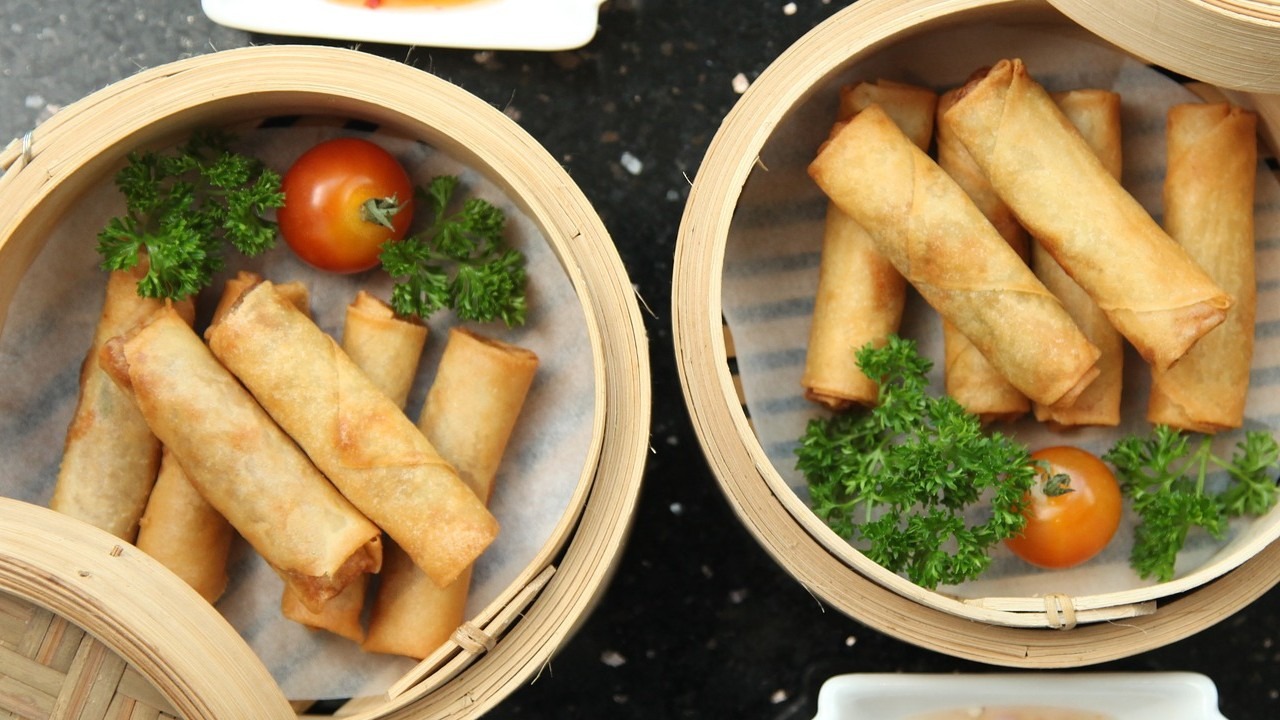
Chicken Spring Rolls Recipe

Chicken Spring Rolls is a popular Chinese cuisine recipe. Made with minced chicken and fresh noodles, this easy snack recipe can be served with cold beverages.

Ingredients

  • 1 tablespoon soy sauce
  • 1 teaspoon rice wine or white wine
  • 1/4 teaspoon freshly ground black pepper
  • 1 teaspoon cornstarch
  • 1 pound ground chicken
  • 2 tablespoons cooking oil divided
  • 2 cloves garlic finely minced
  • 1 teaspoon grated fresh ginger
  • 1-2 stalks green onion chopped
  • 1/2 head of small cabbage about 8 ounces, shredded
  • 2 carrots thin julienne cut
  • 2 tablespoons oyster sauce
  • 50 frozen spring roll wrappers defrosted
  • 2 cups cooking oil vegetable, canola or peanut oil for deep frying

For the Cornstarch Slurry

  • 1 tablespoon cornstarch
  • 1/4 cup water

Steps to make Chicken Spring Rolls

Prepare the Filling

  1. In a large bowl, combine the soy sauce, wine, pepper and cornstarch. Add in the chicken and mix well. Let marinate for 10 minutes (or up to overnight in the refrigerator).
  2. Heat a wok or large saute pan over high heat. When hot, swirl in just 1 tablespoon of the cooking oil. Stir fry the ground chicken until browned. Remove browned ground chicken from wok to a bowl and set aside.
  3. Wipe the wok clean and turn heat to medium. When just starting to get hot, swirl in the remaining cooking oil. Add in the green onion, garlic and ginger and cook for 30 seconds. Take care not to burn these aromatics. Add in the carrots and cabbage. Stir well and turn the heat to medium-high. Stir fry the vegetables for 2 minutes, or until the carrots have softened. Add the cooked chicken back into the wok, stir well. Add in the oyster sauce and toss again. Spread the mixture out on a baking sheet to let cool. Prop up the baking sheet on one end so that any liquid collects on the other side. When the mixture is cool, discard the liquid.

Wrapping Spring Rolls

  1. Mix cornstarch slurry: in a small bowl, whisk together the cornstarch and water. Open the egg roll wrapper package, cover with barely damp towel to prevent drying out.
  2. Add 1 tablespoon of filling to egg roll (see photos for instructions) and roll up. Secure with cornstarch slurry. Keep rolled egg rolls covered with plastic wrap to prevent drying.

Frying Spring Rolls

  1. When ready to fry, heat 1 1/2″ of oil in a wok or deep, heavy skillet to 350F (see tip in photos if you don’t have thermometer). Carefully slide in the egg rolls, a few at a time, to the oil to fry. Turn the egg rolls occassionally to brown evenly and fry for about 3 minutes. Let cool on rack. Repeat with remaining.
Design a site like this with WordPress.com
Get started